

.png)
.png)

Dr. Alan Bauman: Top Tips for the Best Success on Your Hair Growth Regimen (Video)
Read post

If you’re losing hair, you’ve probably seen biotin in every supplement aisle and minoxidil ads on Facebook. But which one actually works? And should you take one, the other, or both? In this article we’ll explore the biotin vs. minoxidil debate.
Biotin and minoxidil aren’t competitors. They might complement each other. Minoxidil stimulates growth, while biotin (especially in a highly bioavailable form) helps ensure that the new hair emerging is strong, thick, and healthy. Together, they give your hair the best chance to look fuller, stronger, and resilient.
Keep reading to learn why both biotin and minoxidil might have a place in your hair regrowth.
Before we compare biotin vs minoxidil for hair growth. We need to cover why your hair loss might be happening, to find the best treatment
In the most common form of hair loss, androgenetic alopecia, the growth phase shortens and follicles shrink. Follicles that used to produce thick strands start to produce thin, fragile hairs prone to breaking. Ultimately, follicles across the scalp might get damaged enough that they stop producing hair all together, which is when you notice visible thinning.
The main culprit is DHT (dihydrotestosterone).
It binds to scalp receptors, slowly miniaturizing follicles.
But other factors—nutrient deficiencies, inflammation, and poor blood flow—also influence hair health. This is where combination hair growth protocols make a world of difference, targeting complementary aspects of the hair growth process.
When comparing biotin vs minoxidil for hair growth, minoxidil has the edge since its main mechanism drives new hair growth.
It’s available in both oral and topical forms, this hair growth ingredient has been studied for decades.
Here's how minoxidil works:
You’ve heard of biotin, the so-called “hair vitamin.” Technically, biotin is vitamin B7, a water-soluble vitamin that plays a key role in keratin production, the protein that forms the structure of your hair, skin, and nails.
D-Biotin is the supporting star: it won’t kickstart hair growth by itself, but it ensures new growth is healthy and strong, maximizing the results from treatments that actually stimulate follicle activity.
Here’s what you need to know:
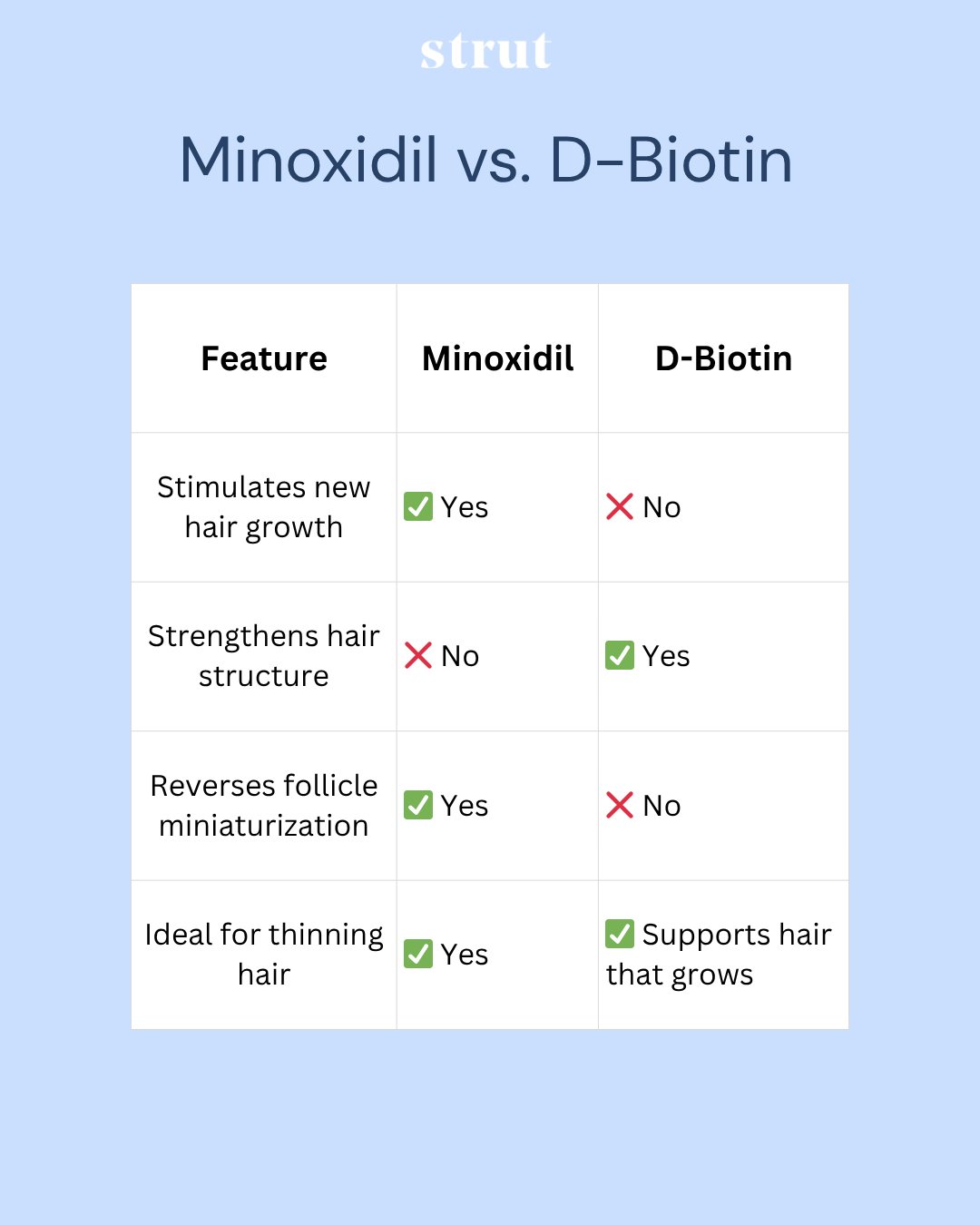
Bottom line: If your goal is regrowth, minoxidil is the driver. If your goal is strong, resilient hair, D-biotin is the structural support. Together, they maximize results.
While you’re comparing biotin vs minoxidil, you’re missing a big piece of the puzzle. Neither minoxidil nor biotin blocks DHT, the hormone that shrinks follicles in pattern hair loss. If you don’t address DHT, you’ll fight an uphill battle.
That’s why the most effective approach is a three-part strategy:
Cover all three pathways, and results are stronger and more consistent.
Minoxidil:
D-Biotin:
Trying to juggle topical minoxidil, biotin supplements, and DHT blockers can be frustrating. That’s why Strut Health’s Hairfect Rx combines:
One liposomal capsule. Three mechanisms. Real results.
It’s simple, effective, and designed to give your hair the best chance at growth, strength, and resilience.
Take Strut Health's 3-minute hair loss assessment to connect with a licensed physician who can create a personalized treatment plan and find the best HairfectRx Formula made just for you.


.png)