Is Propylene Glycol in Hair Products Bad for Hair and Scalp Health?
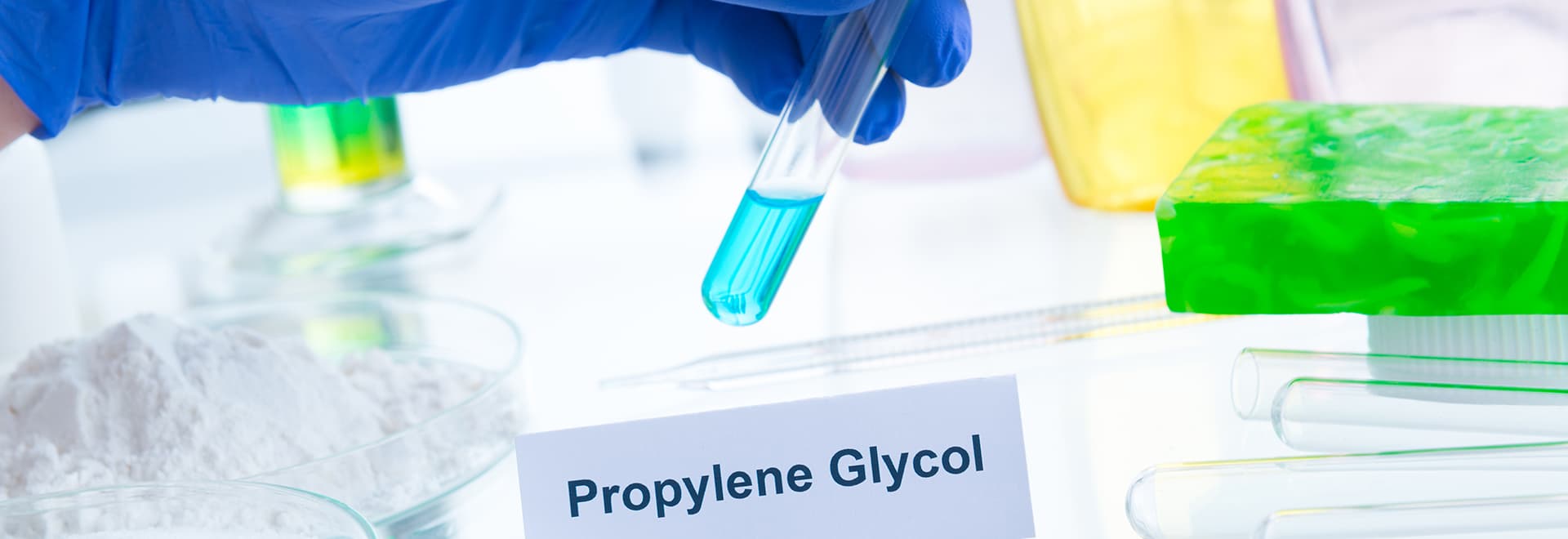
Propylene glycol is a common ingredient in cosmetic formulations including shampoos, conditioners, leave-in conditioners, hair treatments, make-up, and skincare products.
On this page
- What is propylene glycol?
- Why do some hair products include propylene glycol in the formula?
- Can propylene glycol be bad for your hair and scalp?
- Do we have any evidence of propylene glycol being irritating to the scalp?
- Propylene glycol in hair products: Bottom line
- Strut Health propylene glycol free topical hair loss treatments
But, is there a problem with having this chemical in contact with your hair or skin often by regularly using products with propylene glycol as an ingredient?
Some people may have no problem using propylene glycol in hair or skincare products, while others may have issues with it and want to avoid its use.
Below, we will cover the basics of propylene glycol as an ingredient as far as hair care products go, including why propylene glycol is sometimes used in the first place, if propylene glycol can be bad for the hair or scalp, what information we have on the subject, and what you can do if you want to avoid propylene glycol in your hair products.
What is propylene glycol?
Propylene glycol is a small water-soluble molecule with two alcohol groups attached (-OH) that is originally derived from petroleum.
And, while it is synthetically made from petroleum, that doesn’t mean that it automatically gets a red flag. It is best to look at the structure and functioning of the final chemical instead to get a feel for if this is an ingredient that you are ok with. Your specific reaction to products that contain propylene glycol is also a very important factor here.
The FDA considers propylene glycol to be “generally recognized as safe”.
Why do some hair products include propylene glycol in the formula?
Propylene glycol can be a useful and multifunctional ingredient when it comes to hair and skin formulations.
Propylene glycol is a humectant (attracts water), a solvent, an emulsifier, and has preservative properties. So, when trying to get a formula to perform how you want, this can be a useful ingredient for cosmetic chemists.
In the case of hair loss products specifically, propylene glycol is used in most over-the-counter Minoxidil products due to its ability to help dissolve the hair loss active ingredient and increase its uptake from the tissues.
Can propylene glycol be bad for your hair and scalp?
Propylene glycol may be an issue for some people for a couple of reasons.
Firstly, propylene glycol maybe be irritating to the scalp for some users. It may cause allergic or irritant reactions like redness, burning, itching, flaking, or feeling dry or tender.
Technically, if severe scalp irritation were left to persist, it could have a negative effect on the overall health of your scalp and hair.
Secondly, due to the humectant (water attracting) quality of the chemical, it can soak up and hold onto water from the surrounding air, skin, or hair that it is applied to. For some people, this may mean their hair feels more dry and brittle when using propylene glycol regularly.
To help avoid this, you can use other moisturizing ingredients to help lock water into the hair shaft.
Also Read: Why Is My Scalp Itchy?: 7 Possible Causes
Do we have any evidence of propylene glycol being irritating to the scalp?
One small University of Oregon Department of Dermatology study patch tested 84 people with 100% propylene glycol to see if any skin reactions developed. 12 of the participants developed either allergic or irritant reactions to propylene glycol.
So, it is possible that the skin can react to propylene glycol itself, although the study notes that skin reactions to propylene glycol are considered relatively rare.
Another study looked into patients who had reactions to the common over-the-counter hair loss combination of Minoxidil plus propylene glycol, to see if irritation from the use of this common hair loss treatment was stemming from the Minoxidil or the propylene glycol. The participants were patch tested with the ingredients separately to identify the causative irritating agent.
According to the study, propylene glycol was found to be the causative contact irritant in the majority of the cases, not the Minoxidil. Although it is possible to have a reaction from only the Minoxidil, or both agents, this was found less often.
For patients, this means that if you were using a medication like topical over-the-counter Minoxidil and had scalp reactions that lead you to stop treatment, you may be able to patch test to see if propylene glycol was the culprit. If it seems to be the cause of the irritation, a compounded Minoxidil formulation without propylene glycol may be an option.*
Also Read: Where Can I Buy Topical Finasteride?
Propylene glycol in hair products: Bottom line
Propylene glycol is commonly used in cosmetic products due to its antiseptic, solvent, moisture-regulating, and preservative properties.
And, while many people use this chemical without irritation, it can be irritating to others.
For some users, they may develop allergic or contact irritant skin effects like redness, itching, dryness, flaking, burning, or feeling tender. Others may find that their skin or hair feels more dry when using propylene glycol-containing products.
Popular hair loss treatments like over-the-counter Minoxidil or topical Finasteride tend to contain propylene glycol to help with the solubility and absorption of the active ingredients, and may be the root cause of scalp irritation in some users.
If you have experienced irritation with formulas like these, but still want to use topical hair loss treatments, you may be able to find topical treatments that do not use propylene glycol in order to potentially avoid skin irritation.
Strut Health propylene glycol free topical hair loss treatments
Here at Strut, our compounded topical hair loss treatments are formulated without propylene glycol, which may help avoid scalp irritation.*
We focus on active ingredients like Minoxidil, Finasteride, Dutasteride, Spironolactone, Tretinoin, and Biotin combined into customized formulations to suit your specific hair loss needs and preferences. We offer gel, solution, or oral compounded formulations.
If you are interested in trying our propylene glycol free formulations, you can have a free online questionnaire and image-based telemedicine consultation with our U.S. licensed providers today.
If you are a good candidate for treatment, your prescription will be issued and your medication will be shipped to your door with our free shipping.
If you have any questions during your treatment, or need adjustments, our staff and healthcare providers are available for free and unlimited follow-ups.
*Compounded drug products are not approved or evaluated for safety, effectiveness, or quality by the FDA. Rx required.
Topical Finasteride FormulaCompounded
Finasteride + Minoxidil + Tretinoin + Fluocinolone + Biotin
This article is for informational purposes only and does not constitute medical advice. The information contained in this article is not a substitute for and should never be relied upon for professional medical advice. Always talk to your provider about the risks and benefits of any treatment.
All Categories
Recent posts
- Dr. Alan Bauman: Top Tips for the Best Success on Your Hair Growth Regimen (Video)
- What Are the Big 3 for Hair Loss?: The 3 Treatment Combo Explained
- What Is the Minoxidil Mechanism of Action for Hair Growth?
- Minoxidil Shedding: What To Expect | Hair Loss Treatment
- Is Minoxidil a DHT Blocker? How Minoxidil Increases Hair Growth
- U.S. Licensed Providers
- U.S. Pharmacy & Medicines
- Discreet & Free Shipping
- LegitScript Certified
Related posts

Dr. Alan Bauman: Top Tips for the Best Success on Your Hair Growth Regimen (Video)
Read post
What Are the Big 3 for Hair Loss?: The 3 Treatment Combo Explained
Read post
What Is the Minoxidil Mechanism of Action for Hair Growth?
Read post
Minoxidil Shedding: What To Expect | Hair Loss Treatment
Read post
Is Minoxidil a DHT Blocker? How Minoxidil Increases Hair Growth
Read post