


StrutVite
Hair, Skin & Nail Vitamins
Daily supplement with biotin to support healthy hair, skin, and nails.*
Important safety informationSkin Care
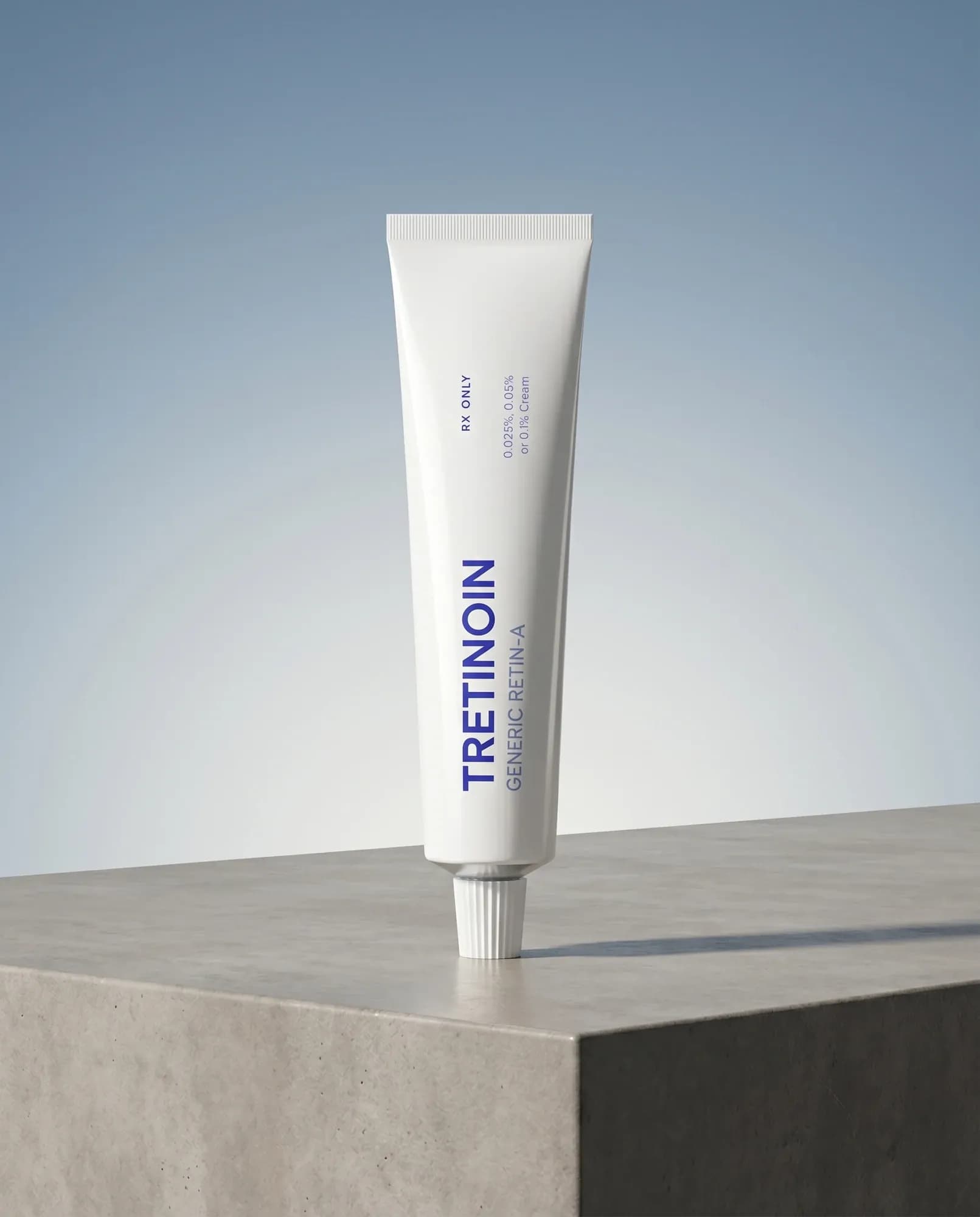
Tretinoin cream available in 0.025%, 0.05%, or 0.1% strengths
Tretinoin cream is indicated as a prescription treatment for acne. When prescribed to help refine skin texture, smooth the appearance of fine lines, or fade dark spots, it is used off-label. A licensed healthcare provider will determine if prescription tretinoin is right for you.
Auto-Refill
20g · 90-day supply
Starting at $35
Tretinoin 0.025%, 0.05%, or 0.1% cream
Prescription-only
May see visible results within weeks*
Increases the rate of skin cell turnover*
Manufactured tube of tretinoin (not compounded)

New skin cells, faster than usual.
Tretinoin cream is indicated as a prescription treatment for acne. When prescribed to help refine skin texture, smooth the appearance of fine lines, or fade dark spots, it is used off-label. A licensed healthcare provider will determine if prescription tretinoin is right for you.
Active ingredient
Tretinoin (0.025%, 0.05%, or 0.1%)
Works by increasing the rate of skin cell turnover, replacing old skin cells with new skin cells faster than usual.

Apply at Night
Apply a pea-sized amount in a very thin layer to clean and dry skin of the entire face, avoiding the eye area and lips.
Storage
Store at room temperature away from moisture and heat. Keep the container tightly closed when not in use.
Common Side Effects
Itching, redness, scaling, dryness, peeling, burning, stinging, and increased sensitivity to the sun.
Wear Sunscreen
Tretinoin works best within a skin care regimen that includes protecting the treated skin from the sun.
Prescription-strength retinoid versus over-the-counter retinol products.
Results may vary.*
Tretinoin may help improve fine lines, dark spots, or rough skin due to sun damage.*
Results may vary.*
May improve fine lines*
Helps fade the look of dark spots*
Supports smoother skin texture*
Prescription acne treatment
Price includes provider consultations and free shipping.
01
Fill Out Medical Questionnaire
Brief health assessment to customize your treatment plan.
02
Get Custom Treatment Plan
Our providers develop a personalized solution just for you.
03
Shipped Directly to Your Door
Discreet packaging with regular delivery.
EXPERT INSIGHT
“Tretinoin works by increasing the rate of skin cell turnover, replacing old skin cells with new skin cells faster than usual.”

Simal Patel, MD
Founder and CEO at Strut Health
Tretinoin works gradually. When used for acne, some people may begin to notice improvement after 2 to 3 weeks, although more than 6 weeks of treatment may be needed before definite benefits are seen. Acne may appear to worsen during the early weeks of treatment as previously unseen blemishes come to the surface. Use Tretinoin exactly as directed by your provider. Your provider may recommend less frequent application if your skin is sensitive or becomes irritated. Applying more medication or using it more often than directed will not produce faster or better results and may increase irritation.
Tretinoin can cause local skin reactions, particularly during the early stages of treatment. These may include redness, peeling, dryness, warmth, stinging, or irritation. More significant reactions such as swelling, blistering, or crusting can also occur. Temporary changes in skin pigmentation and increased sensitivity to sunlight have also been reported. Contact your healthcare provider if you develop severe or persistent irritation or have concerns about a reaction to Tretinoin. This is not a complete list of possible side effects. Review the detailed Safety Information on the product page for additional information.
Before starting out on Tretinoin, you should tell your healthcare provider a few key things. Let them know if you are pregnant, trying to get pregnant, or breastfeeding. Tretinoin can not be used during pregnancy as it can negatively affect the development of a growing baby. You should let your healthcare provider know about any other medications you are using, health conditions you have (for example Eczema), or other skincare treatments you have tried in the past or are currently using. Let your healthcare provider know about other skincare items you are using, even over-the-counter products. Some over-the-counter products can contain non-prescription retinoids or be especially irritating when used alongside Tretinoin.
While you are using Tretinoin you will want to avoid a few things and pick your other skincare items very carefully. Avoid excess sun exposure when using Tretinoin as it can make your skin more sensitive to the sun and make you more prone to burning (always use daily sunscreen for this reason). Avoid using additional retinoid products when you are using this prescription-strength retinoid to avoid the increased risk of side effects, even in over-the-counter products. Avoid overly drying or irritating skin care items like drying soaps and cleansers, alcohol-based products, harsh exfoliants, salicylic acid, benzoyl peroxide, or chemical peels. Avoid using wax hair removal on the Tretinoin treatment area while using Tretinoin, this may cause the top layer of skin to peel off with the wax and should be avoided entirely. Avoid applying Tretinoin to the eyes, mouth, corners of the nose, mucous membranes, or open or damaged skin.
See the detailed safety information under the Safety Info tab for the product.
The online visits are typically complimentary. With Strut, you will only pay for the prescription if you qualify after your medical consultation. If after checking out, the healthcare provider identifies that you are not a good candidate for treatment, you will not be charged. If you decide to transfer your prescription at any time to a non-preferred pharmacy of Strut Health, then you will be charged a $40 provider consultation fee to your credit card on file. Customer service can provide additional details.
Your medication will be shipped to you via USPS from a U.S. pharmacy. There is no additional cost for shipping.
You will want to apply your Tretinoin cream at night. Start by washing your face with a gentle cleanser and water, then pat dry and allow your skin to fully dry. Apply a pea-sized amount of your Tretinoin cream in a very thin layer over the entire face, taking care to avoid the eye area and lips. Since it is a small amount, a patting or tapping application may be easier than rubbing it in. Wash your hands and allow the Tretinoin to soak in. Once the Tretinoin has had some time to soak in, follow with a moisturizer to help with dryness. While you are using Tretinoin cream, it is recommended to wear sunscreen daily as your skin may be more sensitive to the sun. You should also be diligent about moisturizing your skin twice daily to help prevent and improve dryness and irritation that may develop with retinoid use.
Yes. While you are using Tretinoin cream, it is recommended to wear sunscreen daily as your skin may be more sensitive to the sun. You should also be diligent about moisturizing your skin twice daily to help prevent and improve dryness and irritation that may develop with retinoid use.
This Strut Tretinoin cream is a manufactured tube of tretinoin (not a compounded medication). This means that there is a longer expiration date on these medications as compared to a compounded medication.
It can be normal to experience redness, dryness, burning, stinging, or irritation of the skin while you are using Tretinoin. This is more likely to occur at the start of treatment, or when increasing your usage or strength. You can take steps to help support your skin during this time by using gentle, moisturizing skincare products, wearing sunscreen, and avoiding harsh skincare products like peels, acids, alcohol-based formulations, and abrasive scrubs. If the irritation is severe or ongoing, contact your healthcare provider for the next steps and recommendations.
Every formula we offer is prescribed by a licensed medical provider and filled by a U.S. licensed pharmacy. We'll help you find the right option for you. Treatment online, on your terms. We're just here to make it easy.
U.S. Licensed Providers
U.S. Pharmacy & Medicines
Discreet & Free Shipping
LegitScript Certified
Hair, Skin & Nail Vitamins
Daily supplement with biotin to support healthy hair, skin, and nails.*
Important safety informationCompounded Topical
Multi-ingredient anti-aging formula for wrinkles, fine lines, and skin elasticity.*
Important safety informationCompounded Topical
Compounded formula that may support a more even-looking tone.*
Important safety information
*All prescription medications require a valid and complete online consultation prior to approval and final pricing is determined. Our licensed providers have the ability to prescribe for off-label treatment, if they believe that it is an appropriate course of treatment. The drug and medical information provided on this website is not meant to cover all adverse effects, drug interactions, warnings, medical uses, directions and precautions. The information provided is a medical resource and the judgment of your healthcare provider should not be substituted.

